Betterfound vs Google Analytics: Which Should You Use in 2026?
A head-to-head comparison of Betterfound and Google Analytics 4 — privacy, setup time, cookie consent, pricing, and AI agent access.
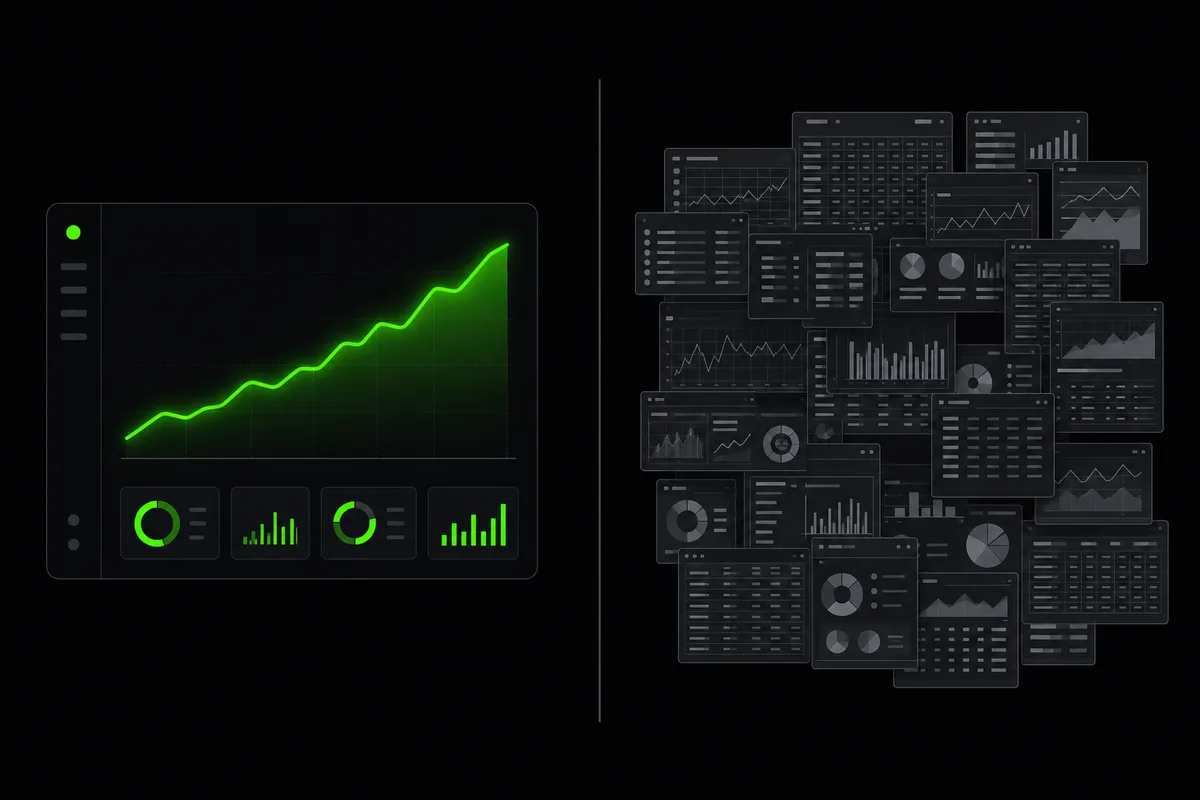
Google Analytics is the default choice for most websites — it's free, deeply integrated with Google Ads, and everyone's used it at least once. It's also famous for a learning curve steep enough that most teams only ever look at three of its two hundred reports.
Betterfound takes the opposite approach: one dashboard, no cookie banner, and a direct line for Claude or Cursor to query your real traffic. Here's how the two actually compare if you're deciding between them.
Betterfound vs Google Analytics
Founded
2005
Similar to
Matomo, Piwik Pro
Typical users
Marketing and business teams reliant on Google's ecosystem
Typical customers
Small businesses through massive enterprises
What is Google Analytics?
Google Analytics 4 (GA4) is Google's free web and app analytics platform, built around event-based tracking, predictive insights, and deep integration with the rest of the Google ad stack.
Key features
Flexible reporting
Pre-built and fully customizable reports across dozens of dimensions.
Predictive insights
Automatic alerts on traffic or conversion anomalies.
Google ecosystem
Direct integration with Ads, BigQuery, Looker Studio, and Firebase.
Revenue metrics
Connect traffic to marketing spend and conversion ROI.
How does Google Analytics compare to Betterfound?
GA4 is free and powerful, but that power comes with cookies, a consent-banner requirement in most regions, and a genuinely steep learning curve. Betterfound trades some of that depth for a dashboard you can read in a minute and an AI agent that can query it directly.
| Feature | Betterfound | Google Analytics |
|---|---|---|
Cookieless / no consent banner Track without a cookie prompt | ||
AI agent access (MCP) Claude/Cursor can query live stats | ||
Setup time Time to get a working dashboard | <60 seconds | Hours |
Script size Impact on page load | <2KB | ~45KB |
Data ownership Who controls and can use your data | 100% yours | Google's servers |
Dashboard complexity Learning curve | Single page | Steep, multi-report |
Goals & conversions Track conversion rate by channel | Built-in, all plans | Manual event setup |
Branded PDF reports Client-ready exports | ||
Price Cost to use | $9/mo | Free (up to 10M events/mo) |
Main differences
- GA4 uses cookies and collects personal data by default, usually requiring a consent banner under GDPR/UK GDPR; Betterfound is cookieless and never collects personal data, so no banner is needed.
- GA4's interface is spread across dozens of reports with a real learning curve; Betterfound's entire dashboard fits on one screen.
- GA4 processes and stores data on Google's infrastructure; Betterfound gives you a dedicated dashboard with data that's yours.
- Betterfound ships a hosted MCP endpoint so Claude or Cursor can query stats, compare periods, and surface insights directly; GA4 has no equivalent open integration for third-party AI agents.
- GA4 is free up to 10 million events/month; Betterfound is a paid product starting at $9/month for 10K pageviews.
- GA4's script adds meaningfully more weight to page load (~45KB) than Betterfound's tracking script (<2KB).
Main similarities
- Both track pageviews, visitors, referrers, traffic sources, and geography.
- Both support custom events and conversion goal tracking.
- Both offer UTM campaign tracking for marketing attribution.
- Both support real-time visitor monitoring.
Why do companies use Google Analytics?
It's free and everywhere
The default choice for teams already inside the Google ecosystem, with no monthly cost up to very high volumes.
Ad platform integration
Direct connection to Google Ads for attribution, remarketing audiences, and bid optimization.
Predictive insights
Automatic anomaly detection surfaces trends teams might otherwise miss.
Bottom line
Google Analytics is the right call if you're deeply invested in Google Ads and need every attribution detail it offers, and cookies aren't a dealbreaker. If you want a dashboard your whole team can actually read, no consent banner, and an AI agent that can answer questions about your traffic on demand, Betterfound is the simpler, faster alternative.
Why teams switch from Google Analytics to Betterfound
Most switches happen for the same three reasons: the cookie banner is hurting conversion, nobody on the team actually opens GA anymore, or someone wants to just ask their analytics a question instead of hunting through reports.
- No cookie banner — some teams see conversion rate improve simply by removing it.
- One dashboard instead of dozens of reports nobody remembers how to find.
- Claude or Cursor can query your real metrics directly through Betterfound's MCP endpoint.
- Setup takes under 60 seconds — paste one script tag and you're tracking.
Frequently asked questions
Is Betterfound a replacement for Google Analytics?
Yes, for standard web analytics — pageviews, visitors, sources, channels, goals, and conversions. If you rely heavily on Google Ads attribution, BigQuery exports, or GA4's predictive insights, weigh that against Betterfound's simpler, AI-agent-first approach.
Do I need a cookie consent banner with Betterfound?
No. Betterfound doesn't use cookies or collect personal data, so there's nothing to get consent for. Google Analytics uses cookies by default and typically requires a consent banner under GDPR and UK GDPR.
Can I run Betterfound alongside Google Analytics during migration?
Yes. Most teams install both scripts side by side for a week or two to compare numbers before removing the GA4 tag entirely.
Does Betterfound support UTM and Google Ads click tracking?
Yes — Betterfound automatically parses UTM parameters and Google/Bing/Meta click IDs (gclid, gbraid, wbraid, msclkid, fbclid) into channel and campaign attribution.
What does Betterfound not do that Google Analytics does?
Betterfound doesn't offer BigQuery export, predictive ML insights, or the depth of Google Ads integration GA4 has. It focuses on making the metrics you actually check every day fast to read — and queryable by an AI agent.


